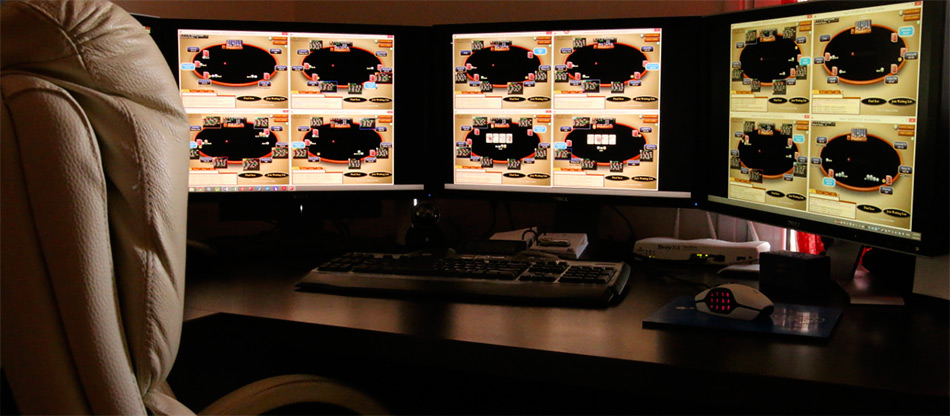
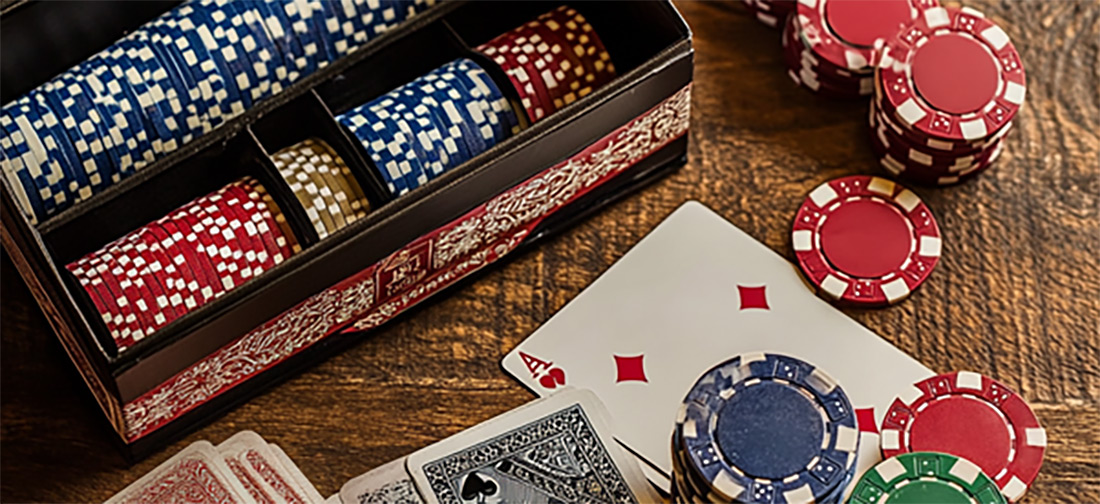
Being a successful poker player means looking for an edge wherever you can find it. Nudge the probabilities in your favour just a little here and just a little there, and in the long run, you are making money. That’s why it comes as no surprise that skilled poker players are trying to figure out how to systemically interact with the casino UX to secure a bit of an advantage.
This is an overlooked aspect of online play that has no real counterpart in the physical game. If left unchecked, it could potentially have a big impact on the fairness and integrity of poker competitions on the Tikal Casino France site and other online platforms.
How UX Affects Poker Play
Online poker is a simulation, where cards are replaced by their electronic equivalents. Player actions have likewise been digitalized; to play a card, all one needs to do is tap the screen or click a mouse button. These interactions are not always 100% intuitive, and inexperienced players often make silly mistakes by clicking on the wrong button. Well-designed UX keeps such errors to a minimum, but with mobile access becoming the standard, there is only so much space to work with. Since poker players need to keep track of a lot of things and have to react quickly, the match remains imperfect and requires a lot of creativity to solve in an acceptable manner.
How Are Skilled Players Abusing the Interface
Poker sharks waste no time identifying things they can turn into their secret weapons. They tend to play a lot and generally stay on gaming platforms that receive a lot of traffic, which helps them to quickly get used to the UX and optimize their technical approach. Some won’t stop there and will instead look for any minor bugs or glitches that let them play faster or gain extra insights. In a competitive environment, players who know how the software works will always have some space for shenanigans, and it’s up to game providers to eliminate any loops that can be exploited. If a gap exists, it’s certain that savvy players will attack it repeatedly and consider it a strategic win.
Preventing Abuse while Keeping the Games Easy to Learn
To stay popular, poker games have to retain simple commands and straightforward gameplay. Newcomers must feel comfortable playing against established players, or they will just go elsewhere. This dictum limits how much nuance the designers can infuse into the interface. It’s very hard to keep things super easy for the beginners while also cutting off any attempts to game the system and strategically abuse a flaw in the UX. Even with extensive player testing and benchmarking against the market-leading games, there are always new holes to patch and previously unseen schemes to block. That’s why perfecting the interface of a casino game never truly ends.
Ensuring Fair Play Across All Skill Levels
Game developers know they can’t afford the perception of ‘being rigged’. If there is a method for established players to fleece newcomers, the word will get out and the game will quickly be abandoned. This is why a guarantee of fairness needs to be baked into the game’s DNA from the start. Poker is a game of skill and it’s understood that better players will win more often, but it can’t happen because they know how to turn the UX against their opponents. Incentivizing players to look for loopholes instead of learning proper poker strategy is counterproductive on multiple levels, and it ultimately leads to chasing away the best customers and replacing them with cheaters.
-
Bankroll Hacking: How Smart Grinders Are Using 'High-RTP' Slots to...Next >